In an increasingly urbanized world, the ability to communicate effectively with our canine companions in public spaces is becoming an essential skill for dog owners. Advanced hand signal training offers a practical solution, allowing for seamless interaction between humans and dogs amidst the hustle and bustle of city life. This article explores the techniques and benefits of utilizing hand signals to guide and manage your dog’s behavior in various public settings. By mastering these non-verbal cues, owners can enhance their pet’s obedience, ensure their safety, and foster a harmonious relationship with both their dogs and the community. Whether you’re a seasoned dog owner or a novice looking to improve your training repertoire, this guide provides the foundational knowledge and strategies to elevate your dog’s responsiveness through advanced hand signal training.
Understanding Canine Communication in Crowded Environments
In bustling public spaces, the ability to communicate effectively with your dog can make a world of difference. Hand signals serve as a silent language, enabling you to guide your dog without the need for verbal commands. This can be particularly beneficial in noisy environments where your voice may not carry well. To ensure success, consistency in your gestures is key. Begin by associating each hand signal with a specific command during training sessions in a quiet environment, gradually increasing distractions as your dog becomes more adept.
- Choose Clear Signals: Use distinct and exaggerated movements to avoid confusion.
- Pair with Treats: Reinforce the correct response with treats or praise to strengthen learning.
- Practice Regularly: Regular practice in various settings helps your dog adapt to different environments.
- Stay Patient: Every dog learns at their own pace, so patience and consistency are essential.
By investing time in advanced hand signal training, you enhance your dog’s ability to navigate and respond appropriately in crowded settings, ensuring both safety and peace of mind for you and your furry companion.
Techniques for Teaching Hand Signals in Public Settings
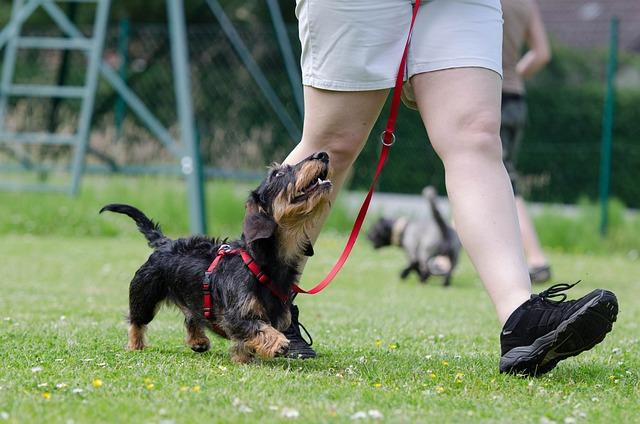
When training your dog to respond to hand signals in bustling environments, it’s crucial to ensure the signals are clear and distinct. Start by selecting simple and consistent gestures that are easy for your dog to recognize. Practice these signals in a quiet setting before gradually introducing distractions. This helps your dog focus solely on the hand gestures, minimizing confusion in more chaotic public spaces.
- Use exaggerated movements initially to capture your dog’s attention.
- Incorporate verbal cues alongside hand signals to reinforce learning.
- Reward consistently with treats or praise to encourage correct responses.
- Gradually increase distractions by practicing in busier environments as your dog becomes more proficient.
- Maintain a calm demeanor, as your dog will mirror your energy and focus.
Once your dog has mastered the basic signals, introduce complex commands in varied public settings to enhance their adaptability. Consistent practice in diverse environments will build your dog’s confidence and responsiveness, making hand signal training effective even amidst the hustle and bustle of everyday life.
Adapting Hand Signals to Various Public Scenarios
When navigating bustling public environments with your canine companion, it’s essential to adapt your hand signals for clear and effective communication. Hand signals should be easily visible and distinguishable from everyday gestures, ensuring your dog can focus on you amidst distractions. Consider incorporating movements that are larger and more pronounced, like extending your arm fully or using both hands to emphasize commands. These adjustments help your dog distinguish your signals from the background noise of the environment.
- Bright Clothing: Wear clothing with bright or contrasting colors to enhance visibility of your hand movements.
- Consistent Positioning: Always deliver signals from a consistent position relative to your dog, whether that be standing in front or beside them.
- Practice in Varied Settings: Regularly practice your hand signals in different public settings to help your dog generalize the commands.
- Use of Props: Incorporate props like a brightly colored glove to further highlight your hand signals if necessary.

Ensuring Consistent Responses Amidst Distractions
Training your dog to maintain focus in bustling environments requires patience and precision. One of the most effective ways to achieve this is through advanced hand signal training. By integrating specific, clear hand signals into your training regimen, you can communicate effectively with your dog even amidst the chaos of public spaces. Here are a few key strategies:
- Consistency is Key: Use the same hand signals consistently to avoid confusion. This helps your dog associate each gesture with a specific command.
- Practice in Varied Settings: Gradually increase the level of distractions in your training environments. Start in a quiet room and work up to busier locations.
- Positive Reinforcement: Reward your dog with treats or praise immediately after they respond correctly to a signal. This reinforces the behavior and strengthens the signal-response association.
Employing these techniques not only enhances your dog’s ability to respond to commands but also builds their confidence in managing distractions. With practice, your furry friend will master the art of staying attentive no matter the setting.